
2026 JANUARY ISSUE
THE FENCING OF WILSON & McDONALD
A CASE STUDY IN
POST-FOUNDER TENSION

Written by Andrew Sia
Share this article !
From the Desk of the Publisher
Here we are telling the story of the founder and the executive. It is known that founders build companies from passion, and executives build companies through discipline.
In the early years, the founder’s intuition is the engine, decisions come from instinct and identity, the brand is a personal story, and success often grows out of obsession, personality, and vision. But when the company needs to be fine-tuned, systems replace personality, governance replaces instinct, global markets require stability, and leadership must be accountable to shareholders, not to the founder’s emotion.
The founders often feel sidelined, misunderstood, betrayed by their own creation, and frustrated when the brand evolves away from their original vision. Professional CEOs, on the other hand, feel constrained by founder interference, pressured by public expectations, responsible for stabilizing the business, and accountable for growth, not nostalgic.
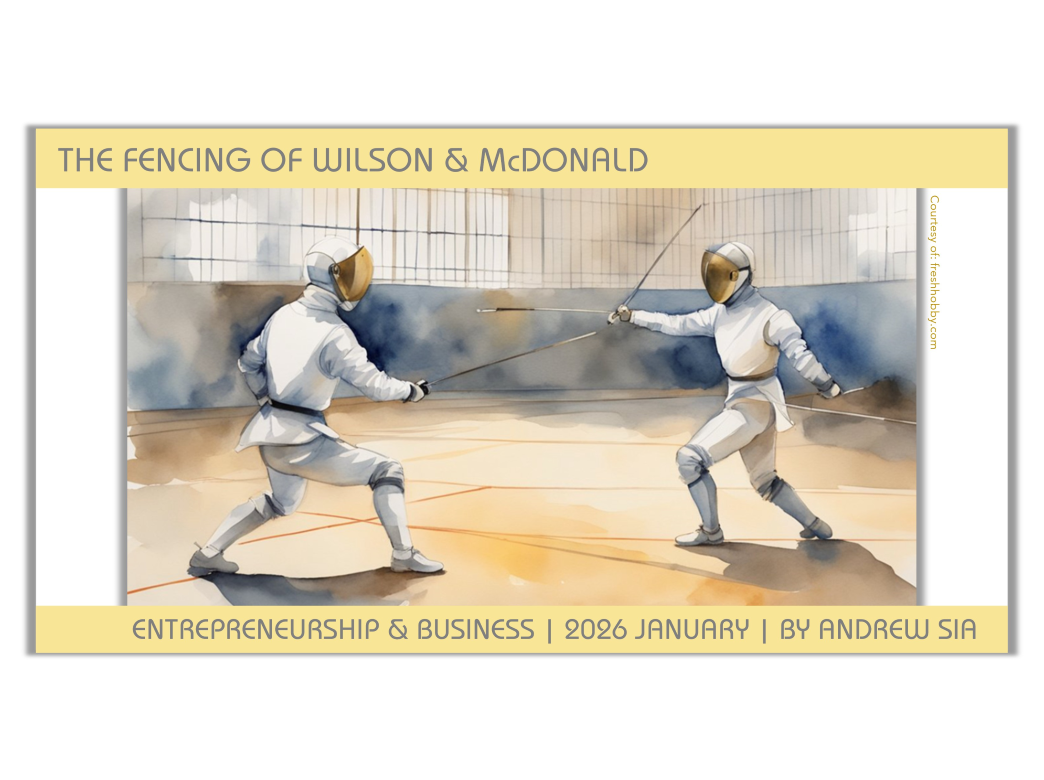
This piece of writing is the fencing between Chip Wilson and Calvin McDonald. It is a leadership lesson, every big organization must learn how to honor its past while embracing the demands of its future. Founders ignite the flame, but professional leadership keeps it burning. Companies that fail to balance these forces become victims of their own success; companies that succeed turn this tension into strength.

Calvin McDonald took over the helm of Lululemon Athletica in 2018. During his leadership, the company experienced significant growth. Revenues more than tripled, profits expanded, the product range diversified, and the global store footprint grew to nearly 780 locations worldwide by 2025. McDonald strengthened the supply chain, accelerated products development, and broadened Lululemon’s international presence.
Yet despite this momentum, Lululemon’s founder, Chip Wilson, has spent much of the past year publicly criticizing the company’s strategy and leadership. In one of the most dramatic displays, he took out a full-page ad in Wall Street Journal expressing his dissatisfaction.
Amid increasing pressure, Calvin McDonald announced that he would step down as CEO effective January 31, 2026.
Chip Wilson remains the company’s largest individual shareholder with an estimated 8% stake valued around $1.8 billion. He has voiced his displeasure at Lululemon’s expansion into non-performance lifestyle categories. He wants Lululemon to stay focus on its core pillars of running, yoga, tennis and golf, and only selective products into casual wear.
Wilson’s spokeswomen, Andrea Mestrovic, stated that Wilson hopes for a reformed board infused with people with entrepreneurial thinking, technical apparel expertise, creativity, and what he calls a “founder mindset.”
Chip Wilson is not without shortcomings. After he created the $100 leggings and built a cult following, he sold 48% of the company to Advent International in 2005. Although Lululemon went public two years later, he remained chairman and held other roles, including chief product designer.
Christine Day became CEO in 2008, and during her tenure until 2013, she quadrupled revenues and significantly expanded the stores. She managed the company through challenges — notably a major recall of sheer yoga pants. Wilson’s controversial comment blaming customers’ bodies for the sheerness problem prompted backlashes; he later apologized and stepped down as chairman.
Wilson left the board entirely in 2015. Since then, former executives have observed that Lululemon must committed to technical innovation and product quality rather than moving too far into casual categories.
Today, Wilson manages the family holding company which owns a substantial stake in Amer Sports, parent of outdoor clothing maker Arc’teryx and other outdoor brands.
Much of Lululemon’s growth has been under McDonald’s management. Since he left Sephora to become Lululemon’s CEO in 2018, annual sales have been more than tripled to $10.6 billion. including major expansion into menswear and new categories such as tennis and golf. Yet the U.S. business — representing nearly two-third of total revenues — has recently flattened. Comparable-store sales have stagnated, and fast-growing competitors like Alo Yuga and Vuori have been attracting Lululemon’s younger customers.
Recently, sales stalled in the U.S., its biggest market, accounting for two-third of net revenues. Comparable-store sales haven’t grown in the region since the quarter. New competitors, Alo and Vuori started to take away its customers.
Lululemon was also lagged recent apparel trends, including color-coordinating sets and the shift toward looser-fitting women’s athletic wear.
McDonald recognized the challenge and reorganized his team to shorten the two-year product-development cycle nearly by half. He also vowed to increase new styles to 35% of the assortment by the spring, up from 23% currently. The brand’s next major test will be the launch of collections under its new creative director, Jonathan Cheung.
Lululemon which is considered as a young brand was founded in 1998 by Chip Wilson in Vancouver, as a design studio that doubled as a yoga studio by night. Its first store opening opened in November 2000 in Vancouver’s Kitsilano neighborhood. It was the time when Wilson noticed the need for better, more supportive yoga apparel during the yoga class. It is easy to romanticize a young brand in its early day often face identity conflicts as they grow.
We find similar struggle in other companies, Under Armour, known for its performance athletic apparel, footwear, and accessories founded in 1996 by former University of Maryland football player, Kevin Plank, who created a moisture-wicking gear to keep athletes cool and dry. Under Armour has faced main challenges with declining sales, intense competition, especially from Nike and Lululemon, and losing its brand’s relevance.
Also, missteps line over expansion into technology while neglecting core product innovation, leading to financial struggles and multiple leadership transitions reflect the difficulty of balancing founder influence with professional management, despite its founder return to steer a turnaround focusing on fundamentals, innovation, and brand restoring.
Even with Nike, the global giant, faces its challenges. While still dominant, it has lost cultural momentum among young customers, lagged in lifestyle trends, and faced increasing competition from emerging brands.
This case study of Lululemon — and its leadership duel between Wilson and McDonald — a broader pattern: as brands grow, founders and CEOs often engage in a silent fencing over identity, innovation, and strategic direction. Maintaining relevance in an evolving marketplace requires more than legacy, it requires humility, innovation, and the discipline to evolve. All these brands would need to rejuvenate to capture their market positions again.